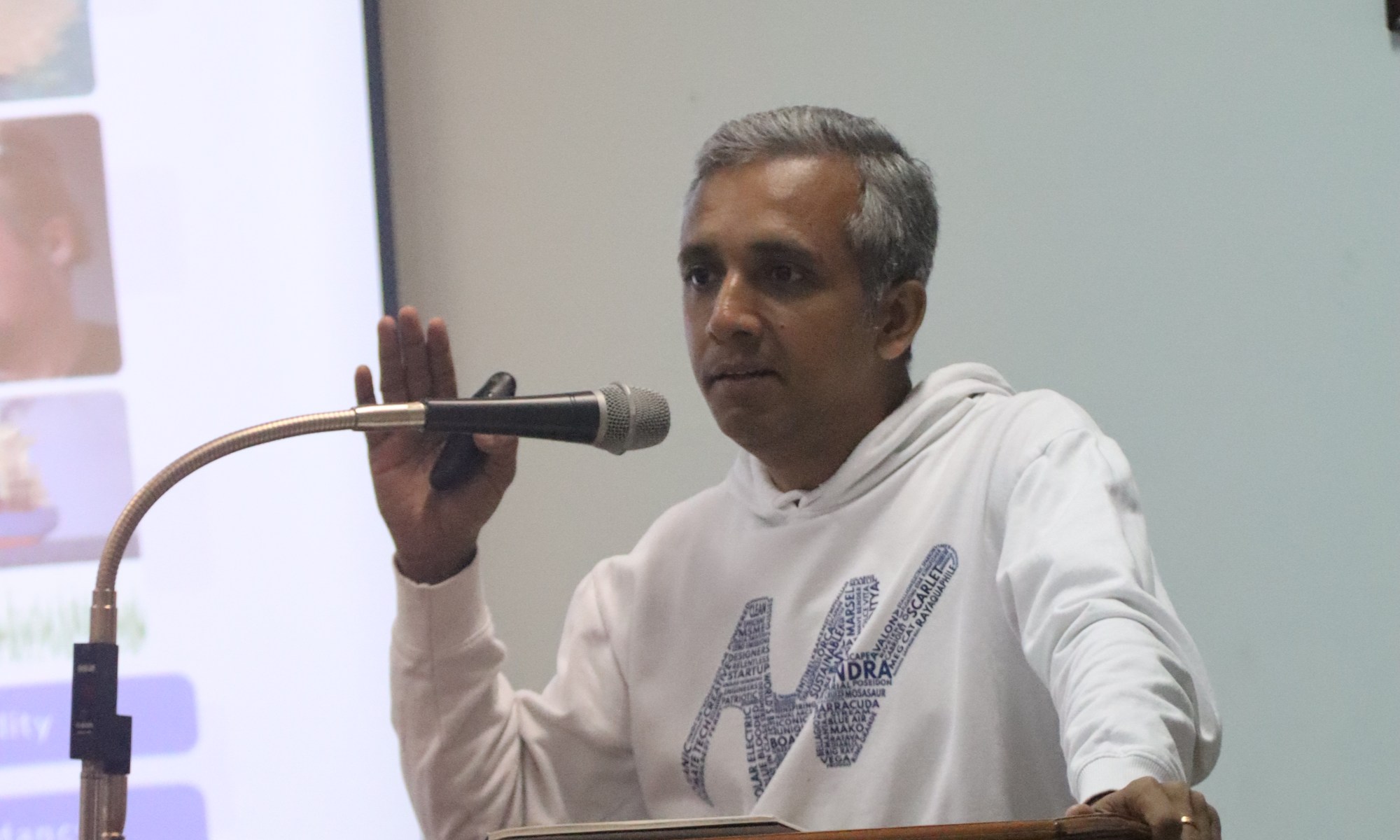

I had the opportunity to give a talk as part of National Maritime Day celebrations at the Marine Engineering Institute, CUSAT. I chose to speak about the key insights from my upcoming white paper, which outlines the progressive steps involved in transitioning from traditional diesel-powered wooden or steel ferries to modern solar-electric GRP ferries.
There are three groups:
- From Steel/Wood monohull Diesel boat – retrofit to electric (Step 1) or solar electric (Step 2)
- From GRP catamaran diesel boat (Step 3)
- retrofit to electric (Step 4) or solar electric (Step 5)
- new super-efficient electric (Step 6) or solar electric (Step 7)
- Air-conditioned GRP diesel boat (Step 8) – retrofit to electric LTO (Step 9) or solar electric (Step 10)
The results are very interesting:
- Retrofitting steel or wooden monohull boats is not economically viable.
- Retrofitting GRP diesel catamarans to make them electric or solar-electric is also not economical. However, building new solar-electric or fully electric ferries can be cost-effective
- Compared to air-conditioned diesel ferry boat, building new solar-electric (LFP)is economical. A fully electric (LTO) ferry can also be cost-effective—provided the CAPEX is around ₹800 lakhs, and not as high as ₹1,700 lakhs, as seen in the GRSE winning bid for the West Bengal ferry project.
The draft version of the detailed white paper is accessible here. https://bit.ly/whitepaper_solar_ferry
 Sandith Thandasherry