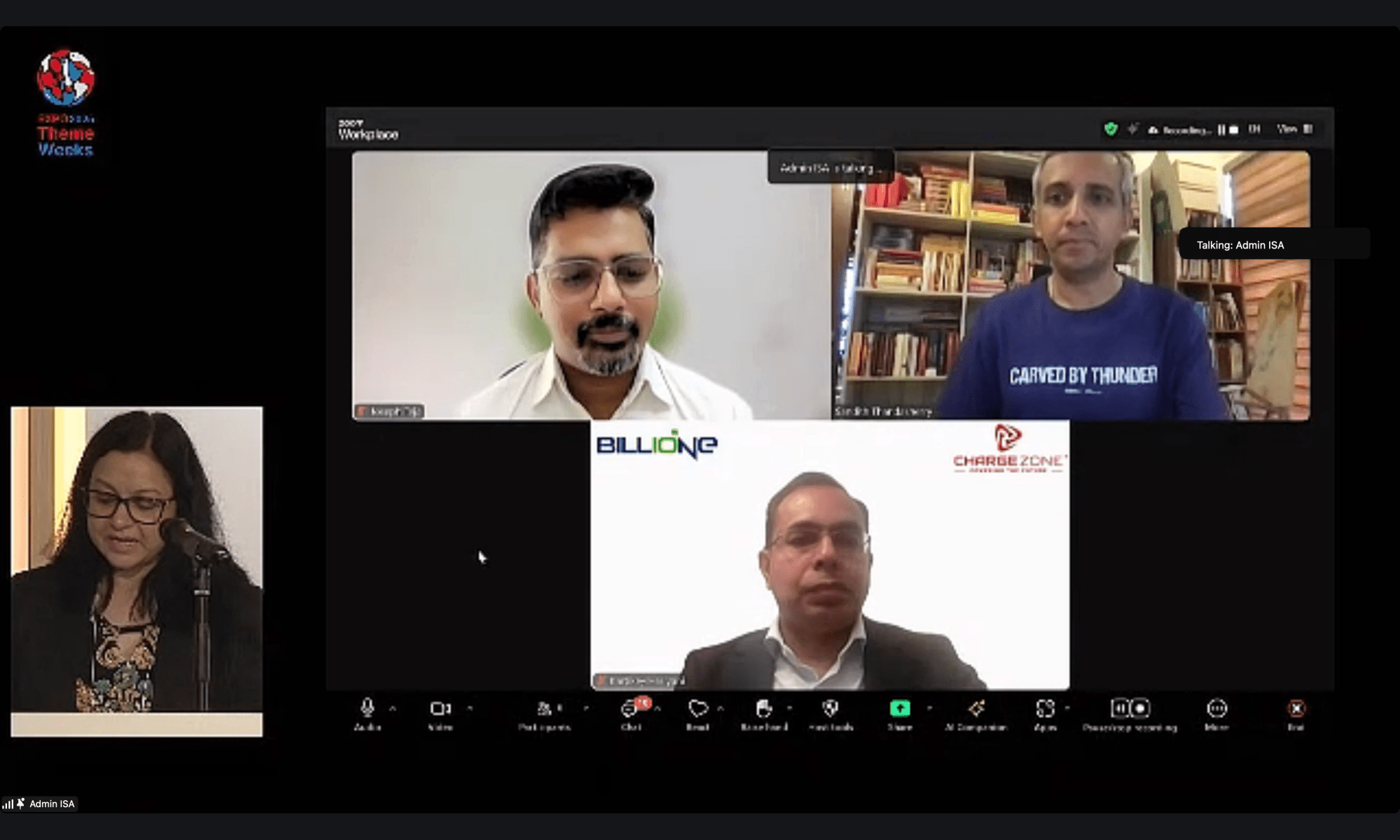

It was an honour to represent the marine transport sector and solar electric boats at the conference organised by the International Solar Alliance (ISA) in Japan. My talk focused on the following key areas:
- The Importance of Decarbonising Marine Transport
I began by setting the context on why decarbonisation in marine transport is essential, both from an environmental and economic perspective. - Technologies and Energy Sources in the Transition
I explored the various technologies and energy sources driving the shift towards cleaner marine transport, highlighting how different solutions suit different vessel types. - Categorisation of Marine Transport
Marine transport was grouped into three categories—boats, small ships, and large ships. I explained the optimal technology mix for each, with a special focus on the significant contribution of solar energy in boats (over 50%, with Aditya achieving 67% solar contribution—read more here). In contrast, the solar share in larger ships remains much lower. - Market Segments and Applications
I presented the market potential of each category, illustrating them with examples of products and applications. - Energy Costs and Drivers of Electrification
The discussion covered how both fuel costs and grid electricity prices are driving the move towards electrification. - Role of Auxiliary Energy
I emphasised that in both large and small vessels, auxiliary energy consumption is significant. Converting this to solar-electric is an effective and economically viable first step. - Cost Comparison of Propulsion Energy
I compared the cost of propulsion energy across different systems:- Diesel ferry: 40 US cents per kWh
- Electric ferry: 10 US cents per kWh
- Solar-electric ferry: 4 US cents per kWh
These numbers underline the clear economic advantage of integrating solar power on boats.
- Success of Aditya
I shared insights from the success story of Aditya, which has completed over 8 years of service and transported more than 2.5 million passengers. Its design plays a vital role in minimising both energy usage and cost—reducing not just operating expenses (OPEX), but also capital expenditure (CAPEX). The total cost of ownership (TCO) of Aditya is less than half that of a similar diesel ferry. - Adoption in India
I concluded by sharing the adoption trend in India:- 34 solar-electric boats already in operation, built by Navalt
- 38 more under construction, indicating rapid recent growth
The presentation can be accessed below.
 Sandith Thandasherry