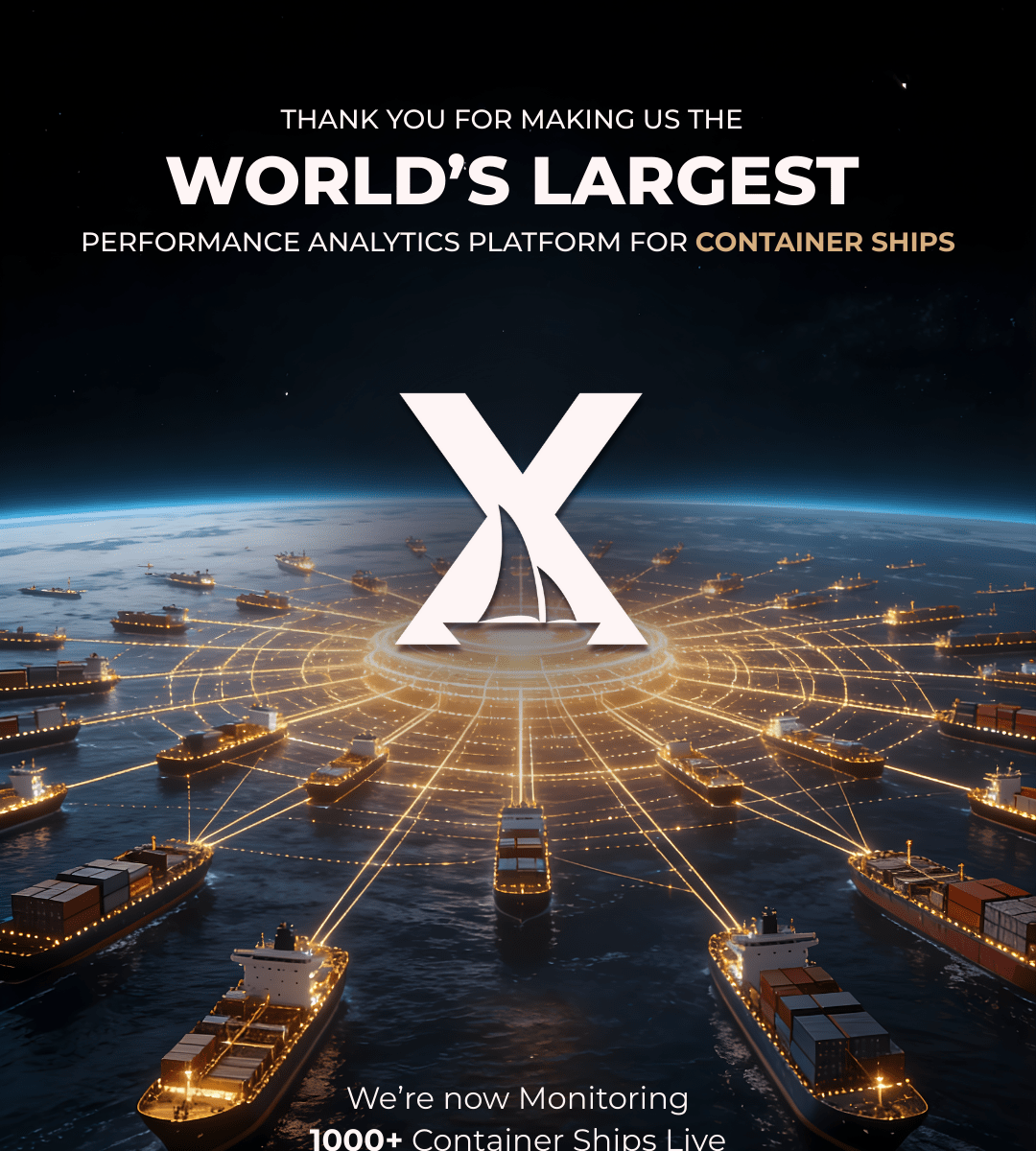

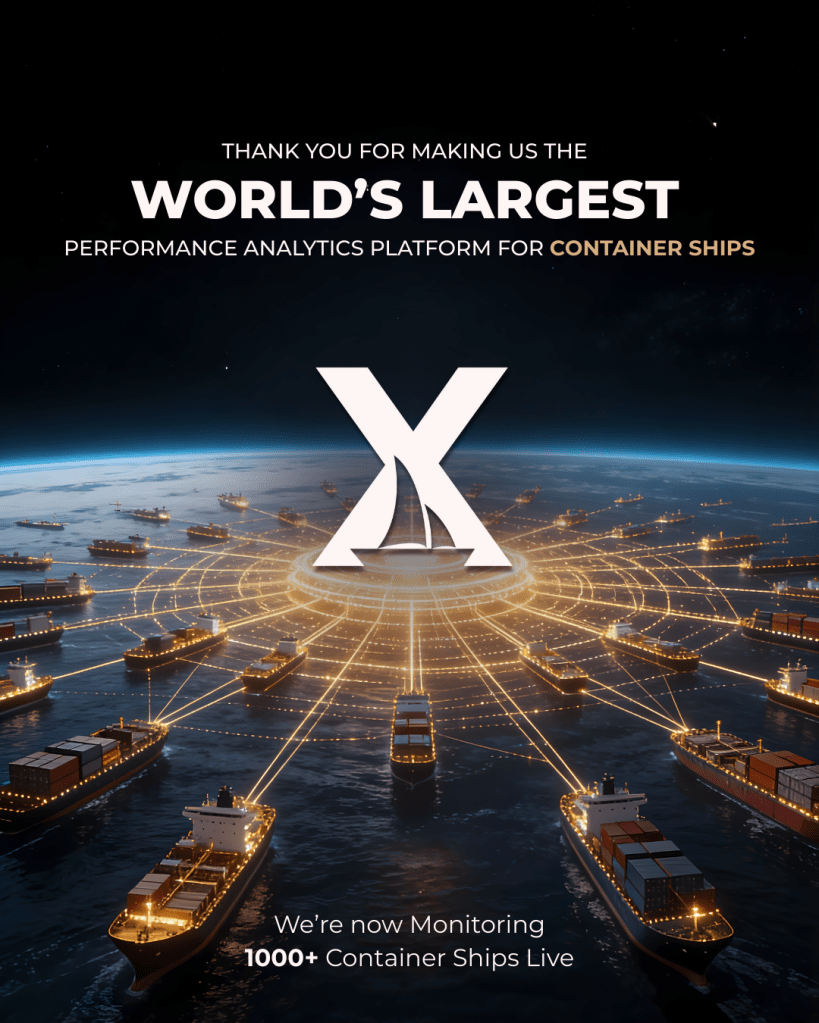
Last week marked a quiet but significant milestone for us at Navalt. Our ship performance division, Oceanix, crossed 1,000 container ships live on the platform — a first in the industry and a milestone that speaks to real scale backed by deep insight.
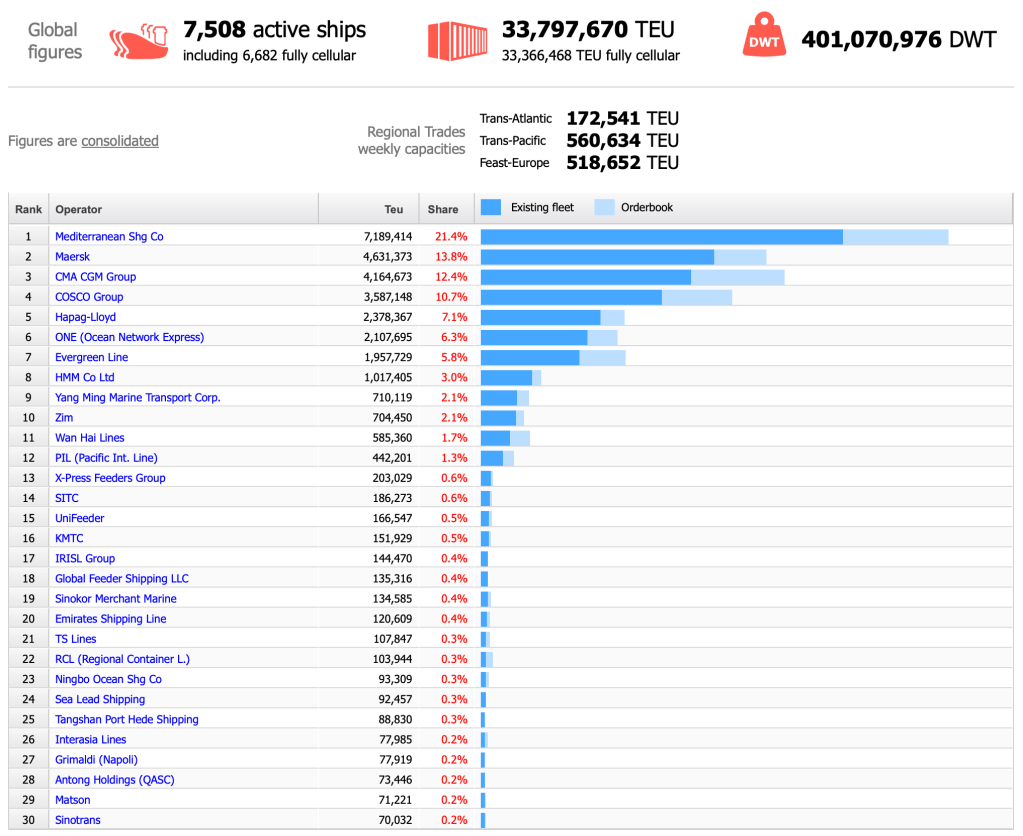
According to the latest Alphaliner Top 100 fleet rankings — the industry’s standard reference for container ship capacity — there are roughly 7,508 container ships in operation worldwide, forming the backbone of global maritime trade.
A Journey Fifteen Years in the Making
Our work in container ship performance analytics began in 2011, when we started partnering with MSC — the world’s largest container shipowner — to build data-driven insights into operational performance. Over the last 15 years, that initiative has grown into the largest container ship performance dataset in the world.
Today, Oceanix holds historical and operational data for over 1,700 container ships (some of which has been scraped), capturing performance across multiple hull forms, coatings, propulsion systems, and trade routes. This unique scale is the foundation of the strength and confidence of our container ship models.
But numbers alone don’t define value — what you do with the data does.
Separating Signal from Noise
One of the hardest problems in ship performance analysis is answering a deceptively simple question:
Why did the ship use more — or less — power today than yesterday?
Real-world ship operations involve many overlapping factors, including:
- Ship speed and voyage profile
- Draft and loading condition
- Weather condition – wind, wave and current
- Hull, propeller and engine condition
- The presence and effect of energy-saving devices
At Oceanix, we’ve developed methods that separate these influences rigorously and transparently. By controlling for speed, draft, and weather, our models isolate the real underlying cause of any change in power — whether it’s hull fouling, engine degradation, or energy-saving device effect, or something entirely different.
This clarity matters. Without it, operators risk acting on noise rather than insight.
Turning Insight into Action
Accurate diagnosis enables better decisions.
For shipowners and operators, our analysis enables them to:
- Time maintenance activities based on measurable performance loss, not arbitrary schedules
- Select coating solutions based on performance data rather than marketing claims
- Evaluate energy-saving devices with vessel-specific ROI calculations that reflect actual operating conditions
In an environment of rising fuel costs, tightening environmental regulations, and increased scrutiny on decarbonisation strategies, these decisions are no longer tactical — they are strategic.
Trusted by Industry Leaders
The credibility of any performance platform must be earned over time.
Today’s Alphaliner rankings list the top ten container shipping operators globally, based on fleet capacity — a group that collectively controls a substantial share of global container capacity.
Among these global leaders, two trust the Oceanix platform:
- MSC (Mediterranean Shipping Company) — the largest container shipowner in the world
- ONE (Ocean Network Express) — ranked within the top ten global operators
Their continued partnership is the strongest validation of our analytical fidelity, long-term consistency, and the practical value Oceanix delivers at scale.
What’s Next
While data and physics remain our foundation, we are now taking the next step.
Our R&D team is actively working on intelligent applications of AI to enhance the value of the Oceanix platform — building on validated performance models rather than replacing them. The goal is clear: to make insights faster, sharper, and more actionable, while preserving the trust we’ve earned over the last decade and a half.
With approximately 7,508 container ships trading globally today, crossing 1,000 live vessels is just the beginning.
That still leaves another 6,498 container ships to bring onto the Oceanix platform.
The journey continues.
 Sandith Thandasherry