

I was in Ayodhya for work. We have a 150-passenger solar-electric boat under construction there, close to launch, and I had gone to assess it. That was the reason for the trip. Everything else here is what happened around it
I went to the temple in the morning.
Grandeur is the first word, and it arrives before you are ready for it. You do not walk up to the Ram Mandir so much as it assembles itself around you. Stone that has been thought about. Scale that has been argued over. The building does not ask your permission to impress you.
Then a second impression, slower to arrive because it is made of small things: it is clean, immaculately and unfussily clean, and the crowd flow is managed with the same care. Thousands of people moving continuously, nobody crushed, nobody shouting, nobody lost. A queue that looks effortless never is.
Raja Ravi Varma on the wall
Along the walls run sculptures — gods, sages, the figures you would expect.
And then, among them, Raja Ravi Varma.
A painter. Not a deity, not a rishi. A man from Kilimanoor in Travancore, dead since 1906, carved in stone at the Ram Janmabhoomi because he is the reason most of us can picture what Ram looks like at all. Before Ravi Varma put the gods on canvas — and then, crucially, onto cheap oleograph prints that reached every household — the gods lived in text and in local imagination. He gave India a shared face for its divinity.
They have placed the painter of the gods among the gods. I found that extraordinarily generous.
I did not know, standing there, that I would meet a second Malayali before the day was out.
The blemish
I should be honest about the other thing, because it was in the air.
The reports of theft from the temple’s donations have reached the ground. People talk about it. Not loudly, and not with any pleasure — with the particular disappointment of those who gave money and expected better. An investigation is running.
It does not diminish the temple, and it should not be allowed to. But it clarifies something I have believed for a long time, and which I will state plainly.
Governments should not run temples. Nor should they appoint the people who do.
A temple is not a department. The moment its custodians are chosen for political reliability rather than for character and competence, you have built a structure whose incentives point away from the devotee. This is not an argument about any one trust, or any one state, or any one party. Kerala’s Devaswom Boards and the Ram Janmabhoomi Trust sit at opposite ends of the country and at opposite ends of the ownership question, and both arrive at the same vulnerability: the people minding the money answer upward, to whoever appointed them, rather than outward, to the crores who put it in the box.
What is needed is not more control. It is audit. Independent, statutory, published annually, with the same seriousness we apply to a listed company — because in scale, a temple like this one is a listed company, and its shareholders are pilgrims who will never see a balance sheet.
Raising stone is the easier half. Anyone can do that with enough conviction and enough money. Keeping the thing honest for a hundred years is the real work. It is unglamorous, it makes no one famous, and nobody carves you into a wall for doing it.
The afternoon: fifty figures in wax
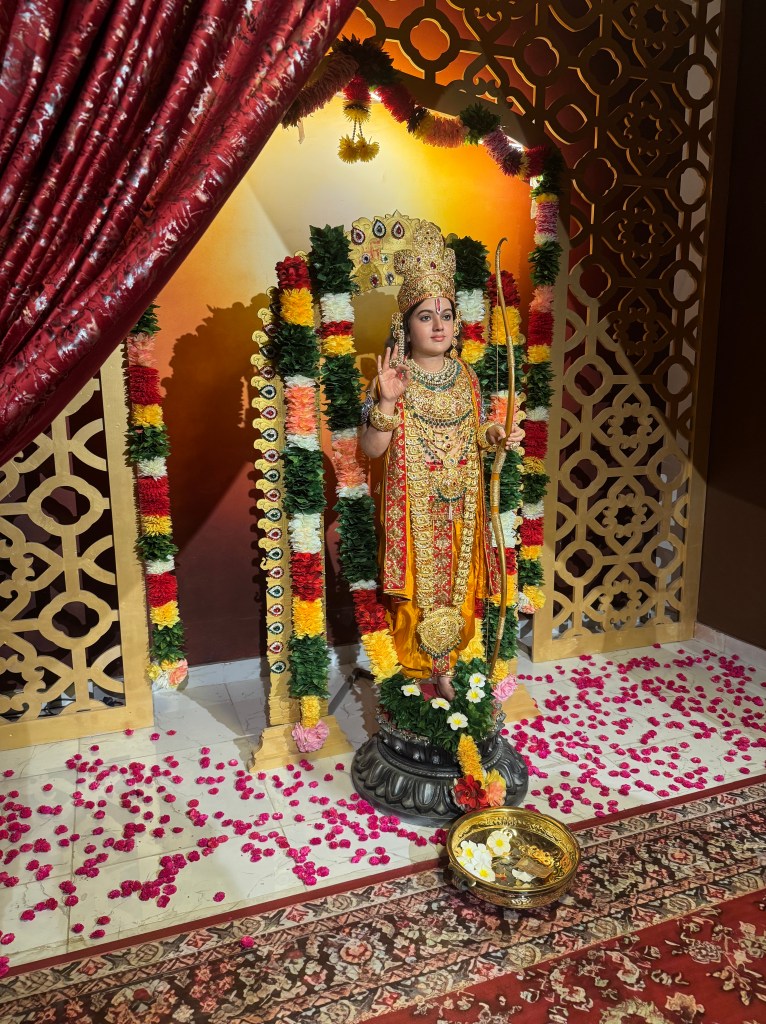
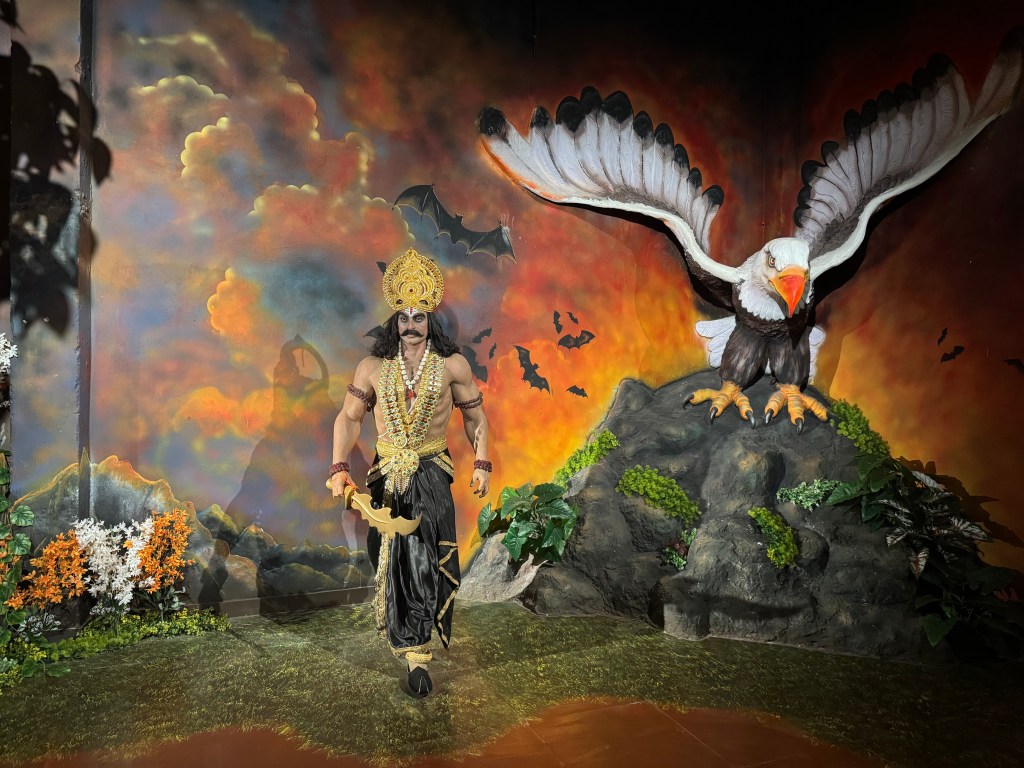
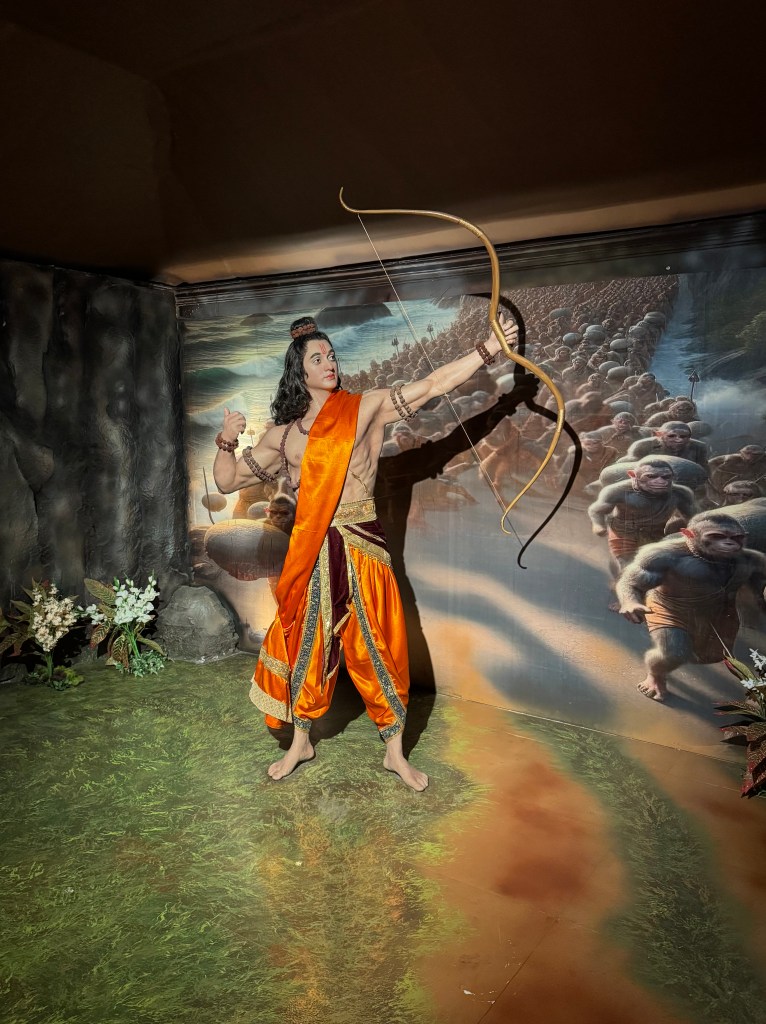
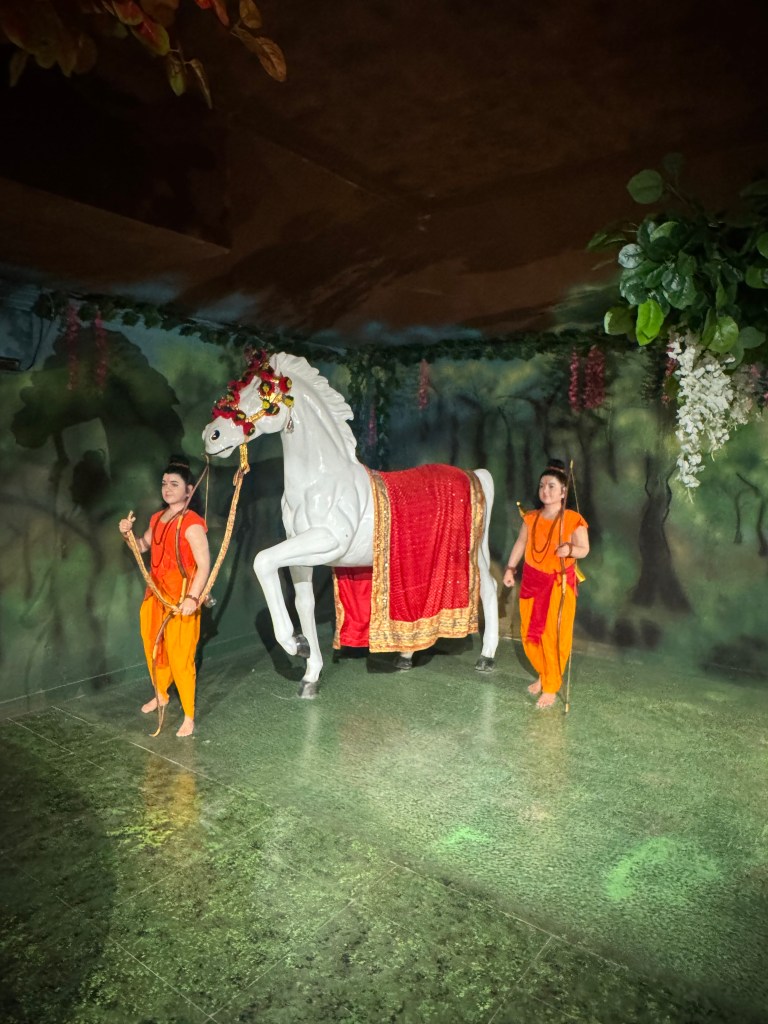
The Ramayana Wax Museum sits on the Chaudah Kosi Parikrama route, a short distance from the temple. Two floors, fifty characters. Downstairs takes you from Ram Lalla’s childhood to Sita’s swayamvar; upstairs is exile, Lanka Dahan, the war. The façade is South Indian temple architecture — carved pillars, a gopuram.
South Indian architecture. In Ayodhya. That should have been my first clue.
Four figures stopped me.
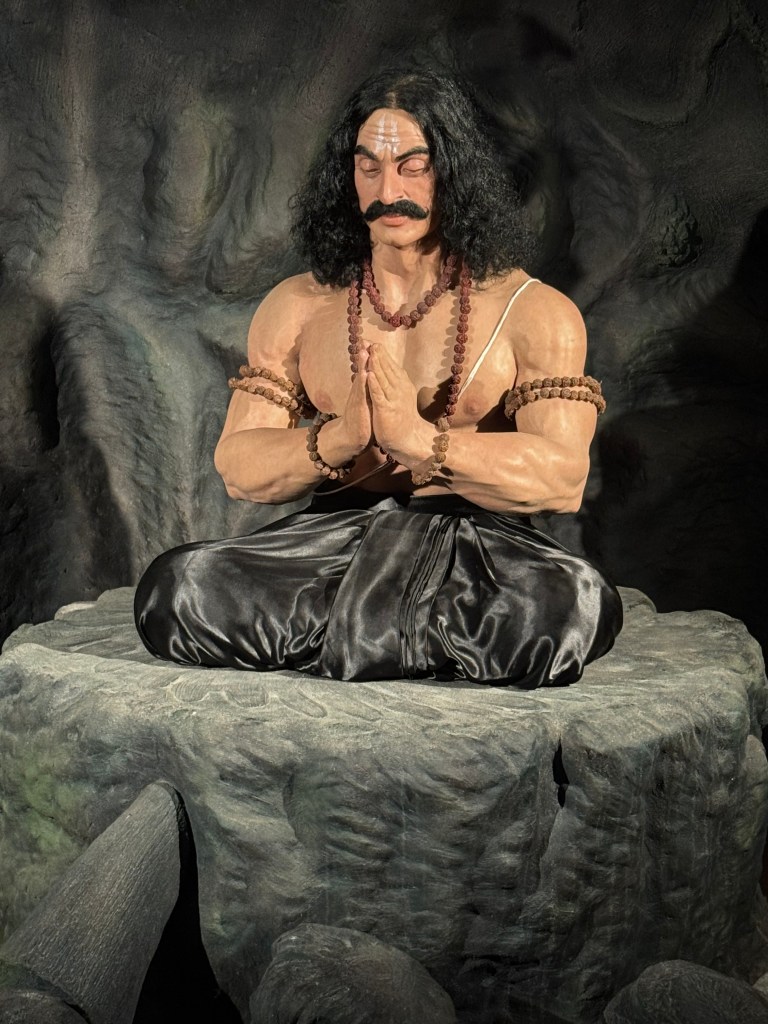
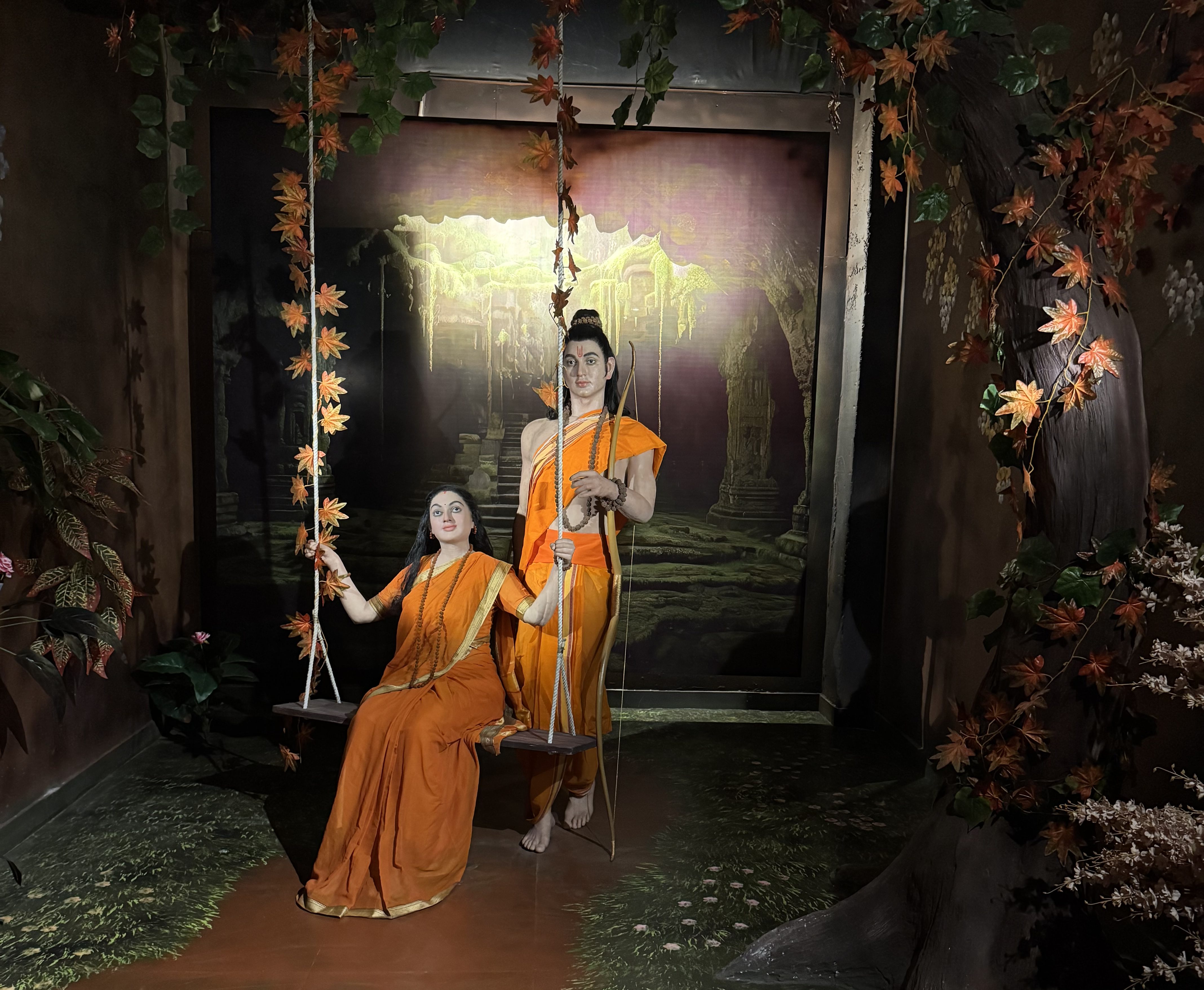
Ram and Lakshman, seated in meditation. Eyes closed, brothers, mid-silence. Hanuman. The one who did not know his own strength until somebody reminded him of it. Ravana. And here is the achievement: he is not a monster. He is enormous and he is dignified, and the horror of the scene is that you can see the king in him. A man who decided the rules did not apply to him. Jatayu. The old bird. He knew what Ravana was. He knew he would lose. He fought anyway, and he lost slowly enough to tell Ram which way the chariot had gone. We have our own Jatayu in Kerala, carved into a hill in Kollam where the bird is said to have fallen. Two Jatayus, two states, both made by people who could not let the story go.

The second Malayali
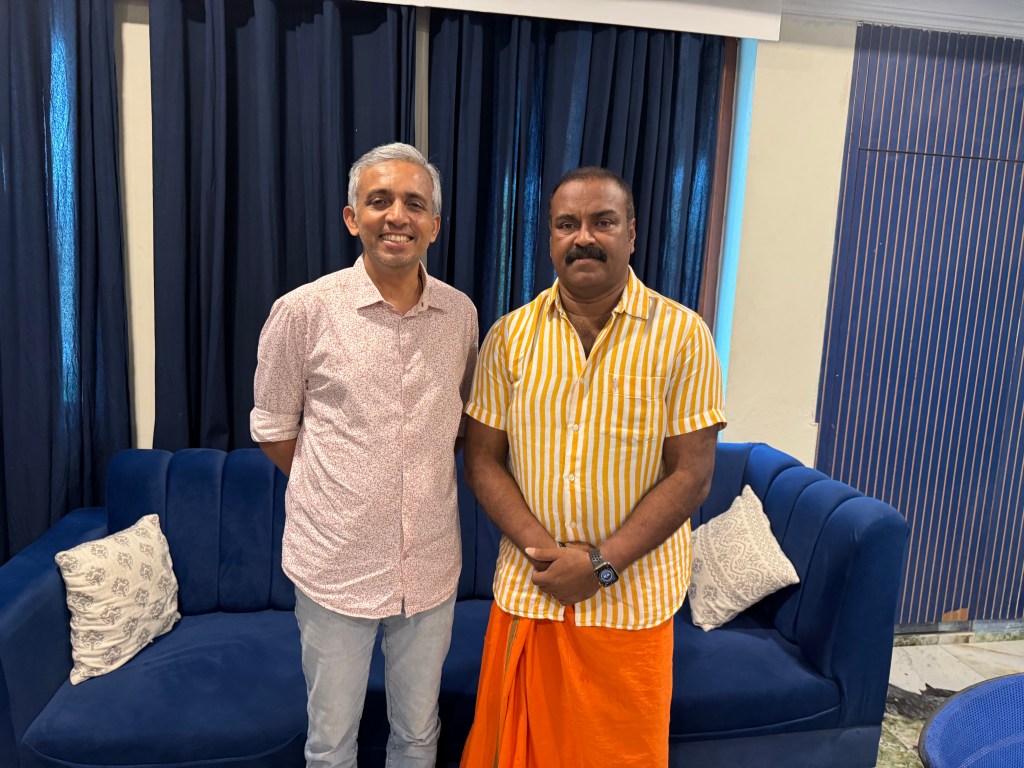
The museum is the work of Sunil Kandalloor, a wax sculptor from Kerala.
He had built wax museums before — Lonavala, Devgad, Thiruvananthapuram — mostly celebrities. Politicians, cricketers, film stars. This one is different, and you can feel that it is different. He read the scriptures. He spent time in Ayodhya, absorbing how the town itself pictures Ram, before he touched a mould. Silicone, wax, fibreglass. A small team making the moulds. He shaped and painted the faces himself.
That is not a project. That is a life poured into one object.
What I took home
We talk about India’s civilisational confidence as though it were a matter of monuments and budgets. It is neither. It is a matter of craftsmen — whether we still produce people willing to give a decade to one thing and get it right, and whether we build institutions clean enough to deserve them.
Ayodhya has a temple. It has a painter from Kilimanoor carved into its wall. It has a sculptor from Kayamkulam working five hundred metres away, whose name almost nobody knows.
Two men from a small coastal state, a century apart, both of whom chose the hardest possible thing and then finished it.
I went to Ayodhya to see a temple. I came back thinking about hands.

