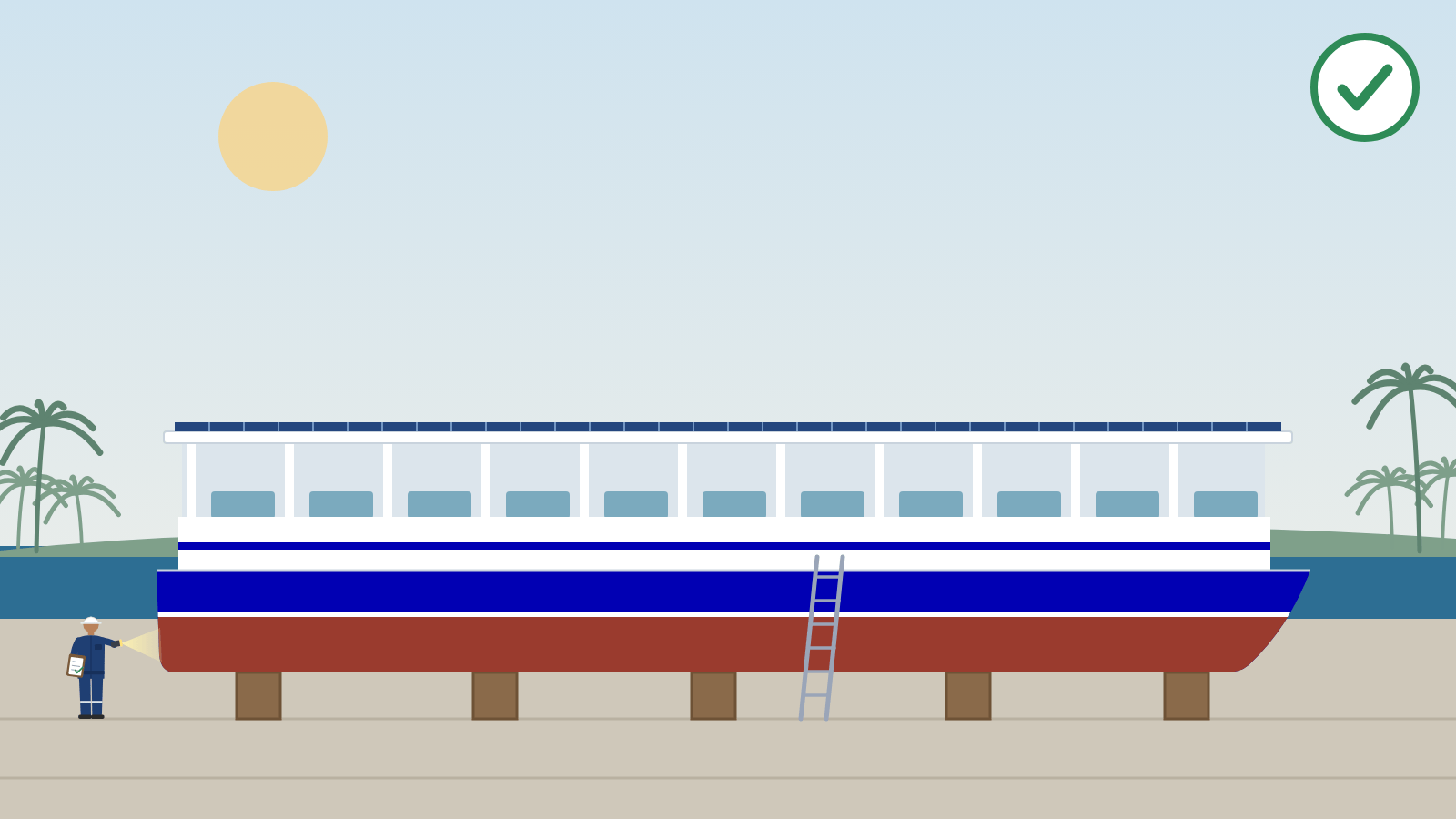

Boat building in Kerala has come close to a standstill. Finished boats wait at the yard for an inspection. Drawings go back and forth on the Board’s online platform. Surveyor visits are hard to get, because the Kerala Maritime Board does not have enough surveyors. Government ferries that are ready cannot enter service. Builders cannot deliver, and cannot get paid.
None of this is about the quality of the boats. It is about the process.
Against this backdrop, the Boat Builders Association of Kerala has presented a simple proposal to the Board. If a boat is designed and built under a classification society, inspect it once at the end. Do not inspect it twice along the way.
I am a builder, so I have a stake in this. Let me explain why it matters to more than builders.
Every boat built for Kerala’s waters needs the Board’s approval before it carries a single passenger. Today that means a long chain of steps. The drawings go to the Board. Surveyors visit the yard when the mould is ready or the keel is laid. They come again before launch. They watch the trials. Only then does the boat get its certificate and its registration number.
That makes sense for a boat built without any other oversight. Someone has to check it, and the Board is that someone.
But many boats are not built that way. Almost every government ferry and public transport vessel in Kerala is built under a classification society such as the Indian Register of Shipping. These are the same organisations that certify ocean-going ships. When a boat is built under class, its drawings are approved by class naval architects. Its materials are tested. Its surveyors visit the yard at every major stage. They check the stability. They test the machinery. They are on board for the sea trials. At the end, the boat gets a class certificate.
Then the Board starts again. Same drawings. Same stages. Same trials.
The Board does not have enough surveyors. Everyone in the industry knows this, and the Board knows it too. So finished boats wait. Ferries the public has paid for sit at the yard. A builder’s money stays locked in a vessel that is ready to work. And all of it waits for an inspection that repeats one already done.
The proposal is straightforward. Two routes. If a boat is built under class, the Board accepts the class approvals and stage surveys, receives the reports as they are issued, and does one final survey before issuing the certificate and registration number. If a boat is built outside class, nothing changes. The Board does what it does today.
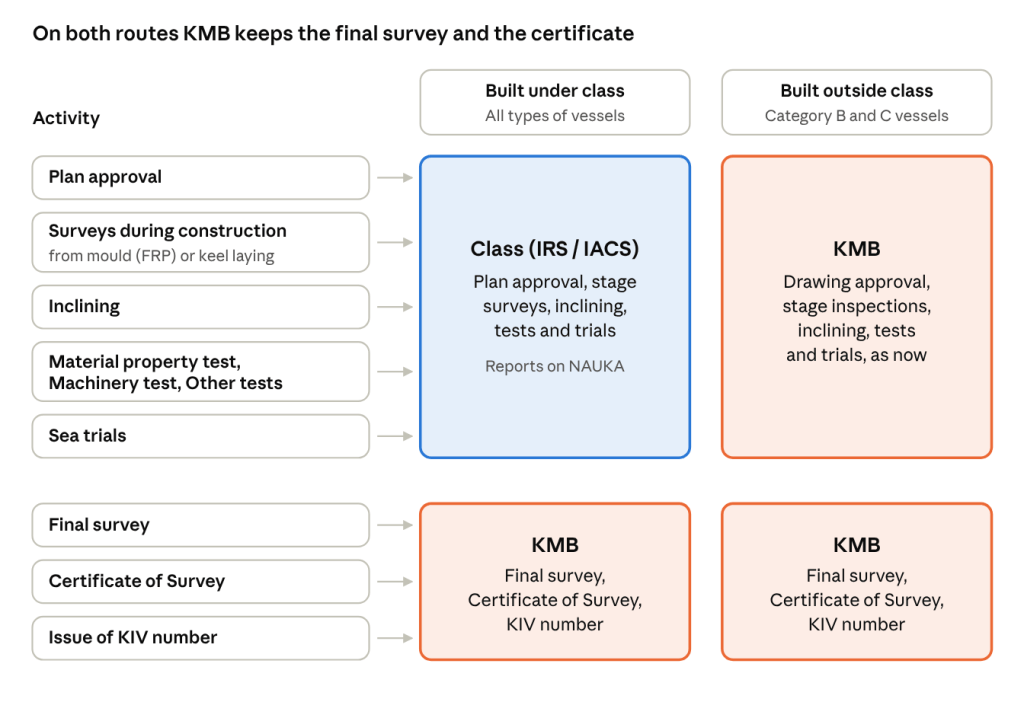
The Board gives up nothing. It still does the final survey. It still issues the certificate. It still decides who is registered. It can still visit any yard at any stage. What it stops is doing the same work twice.
This is not a new idea. DG Shipping has worked this way for sea-going ships for years. It makes the rules, recognises the classification societies, and lets them do the design and construction surveys. Goa already allows a class surveyor’s survey to be the basis of an inland vessel’s certificate. The Inland Vessels Act allows Kerala to do the same, by a government order or a notification. No change in the law is needed.
The real gain is in where the Board’s surveyors spend their time. A classed boat already has expert eyes on it at every stage. A houseboat or a small tourist boat built outside class does not. There, the Board is the only safety check. That is where its surveyors are needed most.
Safety does not improve when the same boat is checked twice. It improves when every boat is checked once, properly.
I hope the Board takes this up. The builders are ready. The ferries are waiting.
References
IV Act – https://shipmin.gov.in/sites/default/files/Inland%20Vessels%20Act%202021.pdf – Page 5: s.3(zo), Page 7: s.5(5), Page 7: s.8(1), Page 8: s12(1-2), Page 8: s.12(4)
Merchant Shipping Act, 2025 – https://dgma.gov.in/download/1763973754_69241a7a5c4c1_the-merchant-shipping-act2025.pdf – Page 11: s.9
Merchant Shipping (Survey, Audit and Certification) – https://dgma.gov.in/download/1791869108_6acdc0b440925_notification-survey-audit-and-certification.pdf – Page 173: 2(g)
DGS Order No.6 of 2013 – https://dgma.gov.in/download/1758280208_68cd3a10551ee_1755346556-68a0767c27f69-201408190103259566260dgsorder6-2013-corrig4.pdf
SOLAS Ch1, Regulation 6 – https://www.imorules.com/GUID-7A245370-5E61-441E-95A0-B67993015303.html

