
On 18 November, DGMA relaxed age restrictions on ships entering the Indian registry and removed mandatory exit-age limits, subject to prescribed compliance conditions. The Shipyards Association of India has called it a path to India becoming the world’s dumping ground for old ships. I agree with them. But I want to add something.
I started my career building ships. I supervised the construction of tankers in Korea and Japan. I have seen what a new hull looks like and what a twenty-five-year-old hull costs to keep alive. Steel renewal, surveys and dry docks all add up. Owners know this. They still buy old ships because the purchase price is low.
That is the trap. An old ship is cheap to buy and expensive to run. The owner saves on capex, and the country pays on opex. We pay through imported fuel, foreign exchange and emissions, for fifteen or twenty more years. Without a mandatory exit age, there is no fixed date when that ends.
There is a second cost, and it matters more to me. Every old diesel ship we keep running is a ship we are not replacing. Hybrid, electric and alternative fuels need replacement cycles to enter a fleet. Remove mandatory exit-age limits and you slow those cycles for a decade or more. The Indian fleet is already getting older while the global fleet gets younger. This is the wrong time to slow down.
Then there is the contradiction. We are spending public money to build shipyards and also making it easier to buy the ships those yards should be building. Yards do not invest on announcements. They invest on orders. At NAVALT, we have built 46 solar-electric boats because customers placed orders, one after another. Capacity follows demand. Nothing else creates it.
A shipyard is more than a shipyard. Every order pulls in steel, engines, switchboards, pumps, cables, electronics and design work, much of it from small suppliers. The government estimates a 6.4-times employment multiplier for shipbuilding. Steady orders let those suppliers build factories, train welders and engineers, and develop technology they would otherwise import. That capability takes decades to build. It can be lost in a few years of weak demand.
There is also a strategic reason. Commercial and naval shipbuilding draw on the same industrial base: the same steel mills, propulsion makers, electrical suppliers and skilled hands. A nation that cannot build its own merchant ships will find it harder to build its own warships. Commercial orders keep that base busy between defence programmes. Old imported hulls do nothing for it. This order solves a short-term tonnage problem and gives up a long-term strategic capability. That is a poor trade.
But I will not pretend the owners have no case. Capital costs them far more than it costs a Greek or Japanese owner. Indian yards are often slower and more expensive. The Indian flag carries tax and compliance costs that open registries do not. Owners are not villains. They are responding to the numbers in front of them.
So change the numbers. Don’t lower the standards.
Give long-tenor, low-cost finance, but only for ships built in India. When an owner scraps an old ship at Alang, give a credit that can only be used against an Indian newbuild. Let PSU cargo owners give long-term charters to Indian-built, Indian-flag ships. A ship with a ten-year charter can be financed. Fix the tax and cost gap between the Indian flag and the open registries directly. Place series orders on standard designs so yard prices and delivery times come down. If a ship has to leave the fleet, let that be decided by its efficiency, not only its age. And start in coastal, inland and harbour craft and ferries, where Indian yards already win on price and delivery.
Done this way, supporting owners and supporting shipyards become the same policy. Government does not have to choose between them.
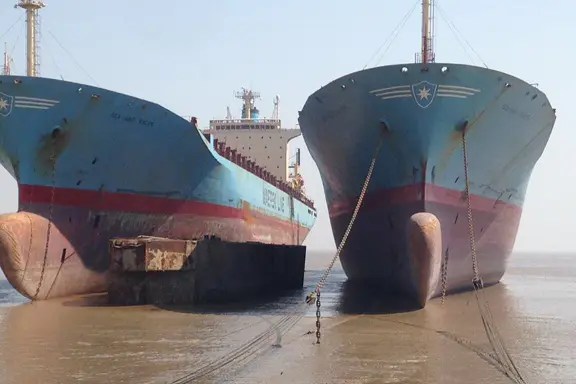
India already sits at the end of a ship’s life. Alang is where the world’s ships come to be broken. That is where old ships belong. Not on our registry.
References:
https://www.marinelink.com/news/india-eases-vessel-age-restrictions-544468

