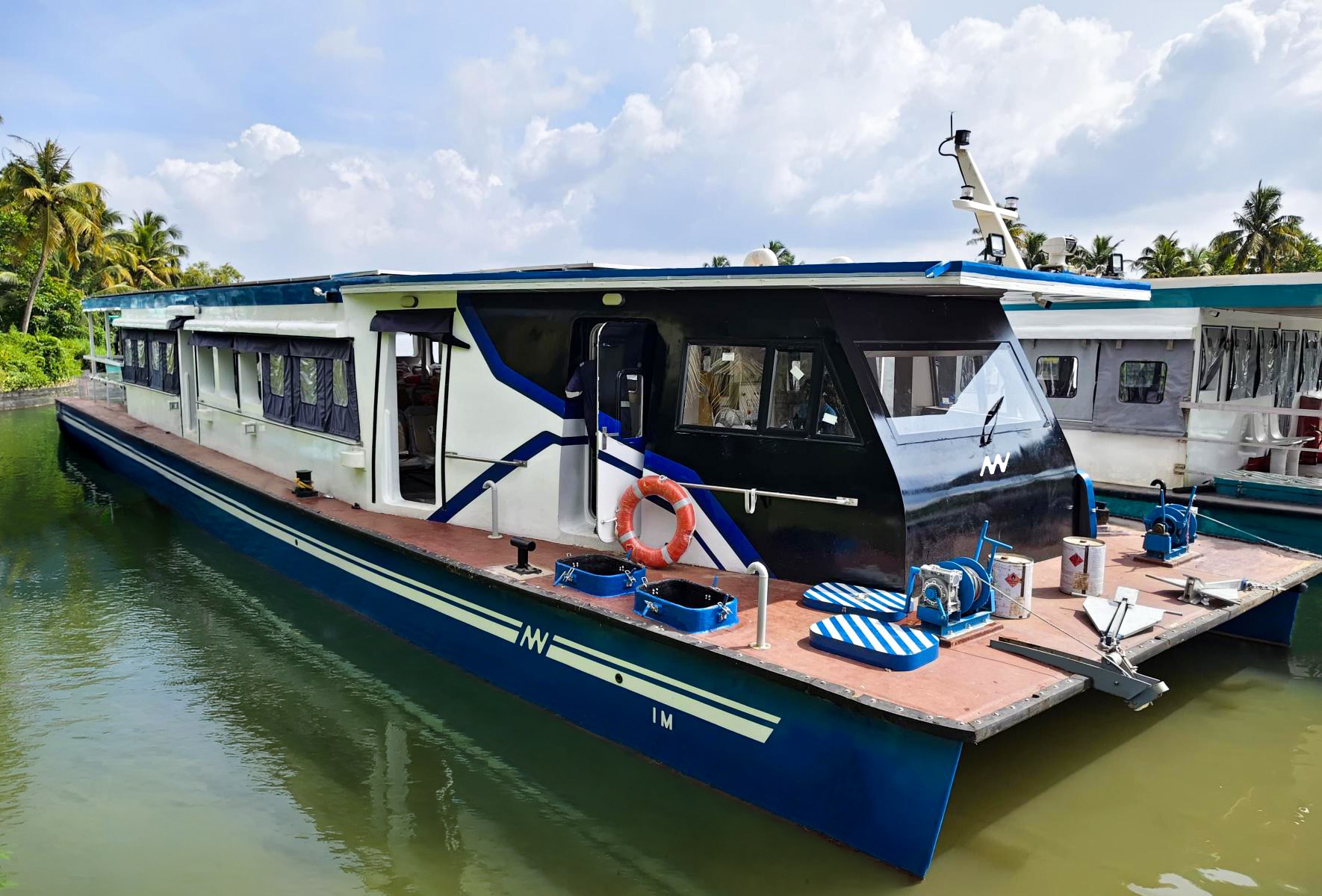

Five. That’s how many Aditya-class solar ferries we’ve now delivered to the Kerala State Water Transport Department. The fifth one completed the formalities to enter into service.
The boat itself has changed a lot since the first Aditya, even if it doesn’t look it from the dock. The first Aditya ran on a 50 kWh battery. This fifth one runs on 80 kWh. And every stage of the energy chain in between has gotten better too. Solar production is more efficient — the panels pull more out of the same sun than they did back then. Storage is more efficient — the battery holds more energy and loses less of it sitting idle. And the transfer from storage to load, to the propulsion system and everything else drawing power onboard, wastes less along the way. Stack those gains across production, storage, and transfer, and the compounding effect is real. A boat that looks similar today is, underneath, a materially better machine than the one that first proved solar-electric ferries could work in Kerala.
Here’s what that looks like in a day’s work. The 20 kW solar plant onboard produces about 75 kWh on an average day. Combine that with the 64 kWh usable from the 80 kWh battery, and the boat has 139 kWh to draw on. At 6 knots, the boat draws 16 kWh — enough for a run time of more than 8 hours, or close to 90 km of range. Grid charging, when needed, averages about 450 rupees a day.
Compare that to a diesel ferry covering the same 90 km a day. It burns about 120 litres of diesel, at a running cost of around 12,000 rupees a day. Over a year, that gap adds up to roughly 40 lakh rupees in energy costs saved, per boat.
Each Aditya carries 75 passengers. No diesel. No emissions. Just sun, batteries, and a quiet electric motor doing the work a noisy engine used to do. Multiply that across five boats, thousands of trips, and the diesel saved starts to look like a real number, not a rounding error.
The operating economics tell the same story. The Aditya series runs at an operating cost of about 6.7 paise per passenger-kilometre — likely the lowest of any public transport ferry anywhere. Almost the entire lifetime cost is the CAPEX you spend once, upfront. After that, carrying passengers costs next to nothing.
What strikes me about this milestone isn’t the boat. It’s the repeat order. Governments don’t reorder five times because a pilot looked good in a press release. They reorder because the boats run, the maintenance is manageable, and the economics hold up trip after trip. That’s the real proof point.
There are more Adityas coming. Six more 75-pax ferries and four 30-pax ferries are in the pipeline for Kerala over the next year. Watching a single tender turn into a fleet, and a fleet turn into a template other states are now asking about, is the part of this work I find hardest to put into words.
We’ll have three months of actual operating data on the fifth Aditya soon. I’ll share those real numbers against this estimate when they’re in.
The boats are expected to be inaugurated by Kerala Chief Minister, Sri. V.D. Satheeshan later this month and we look forward to the event and its induction to the fleet.
Vessel Specifications:
- Length x Breadth: 21 x 7m
- Capacity: 75 passengers + 3 crew
- Speed: cruise 6 knots / max 7 knots
- Solar Plant: 20 kW
- Propulsion Battery: 2 x 40 kWh Manta LFP batteries (DNV approved)
- Motors: 2 x 20 kW Mako Inboards
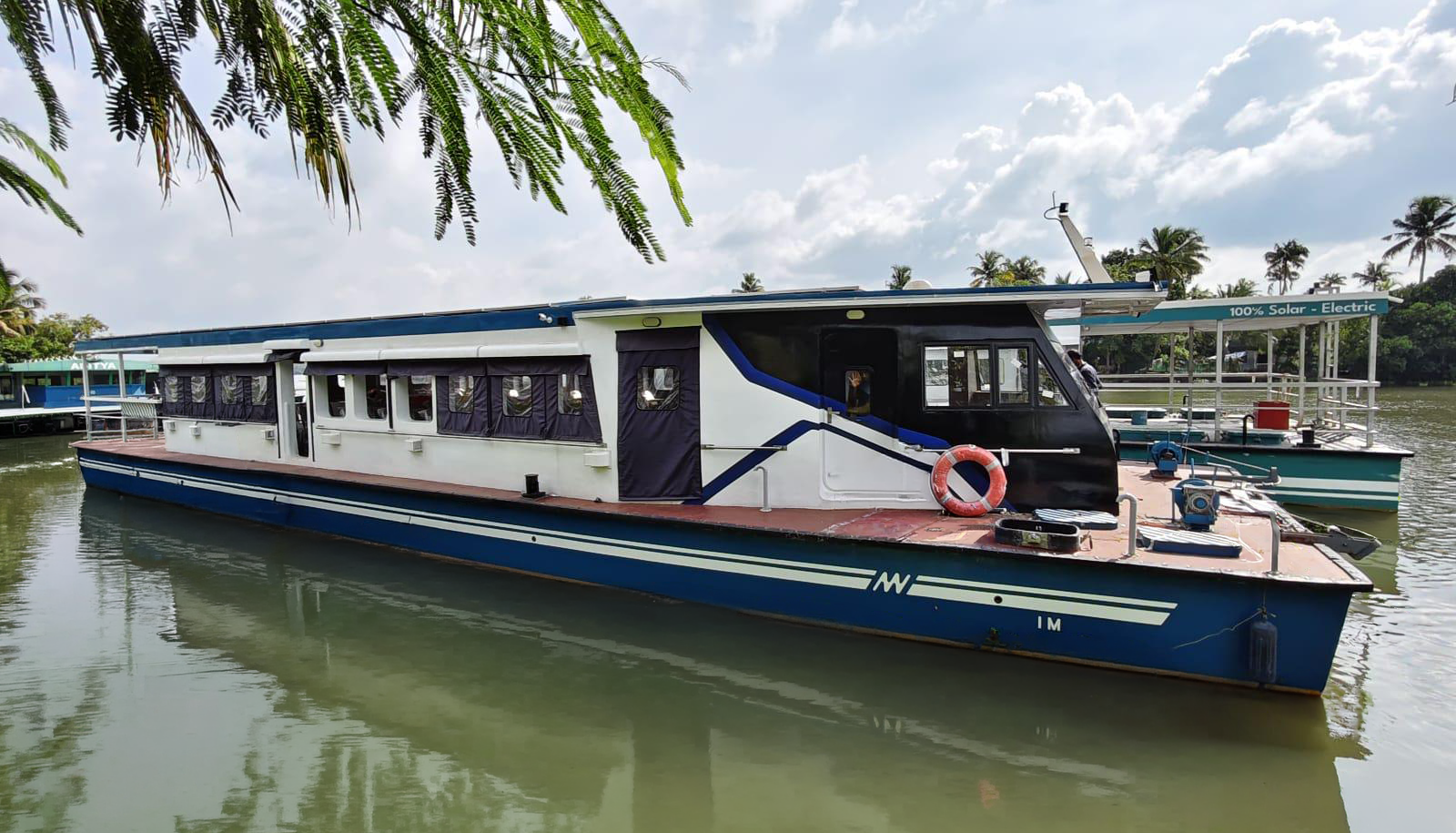
The Aditya platform is the most successful public transport platform with five of the variants delivered and six more under construction. It offers flexibility in length—20 to 25 meters—with operational speeds of 6–10 knots and a range of 60–120 km per day. Learn more about the platform here: https://navaltboats.com/ferries/aditya
#SolarElectricBoats No. 46 (inching towards half century!)
Story in The Hindu newspaper


Well done dear Sandith, very proud to know about this wonderful journey. Hope to ride one of your ferries in other states as well. You have a great order line-up, concentrate on scaling up and making world class asthetics and design your interiors to match the best in class.
Good luck for all future endeavours and may you be a bright shining star of India.
Take Care, God Bless.
Neville.
LikeLike